
Related Articles



Growing a small business successfully is a goal for many entrepreneurs, but it requires patience, smart planning, and consistent effort. Starting a business can be exciting, but making it grow over time is where the real challenge begins. A successful small business needs loyal customers, strong financial management, effective marketing, and a clear understanding of the market.
Whether you run an online store, a local shop, a service business, or a home based business, there are practical steps you can follow to increase sales and build a strong business. In this article, we will discuss how to grow a small business successfully and create a foundation for long term success.
Understand Your Target Customers
One of the most important steps in growing a small business is understanding your target customers. You need to know who your customers are, what they need, what problems they face, and why they choose certain products or services.
When you understand your audience, you can create better products and marketing messages. Instead of trying to sell to everyone, focus on the people who are most likely to become your customers.
You can learn about your customers by asking for feedback, reading reviews, studying buying habits, and communicating with them directly. Customer information can help you make better business decisions and improve your overall strategy.
Set Clear Business Goals
A business without clear goals can easily lose direction. Before trying to grow your small business, decide what you want to achieve.
Your goals may include increasing monthly sales, getting more customers, expanding your product range, improving customer service, or entering a new market.
Try to make your goals specific and realistic. For example, instead of saying that you want more customers, set a goal to increase your customer base by a certain percentage within a specific period.
Clear goals make it easier to measure progress and identify areas that need improvement.
Improve Your Products or Services
Customers are more likely to return when they receive quality products and reliable services. Improving what you offer should be an ongoing part of your small business growth strategy.
Listen carefully to customer feedback and look for ways to make your products or services better. You may need to improve product quality, introduce new features, provide better packaging, or make your service more convenient.
Do not change everything at once. Focus on improvements that provide real value to your customers. A better customer experience can lead to positive reviews, repeat purchases, and recommendations.
Build a Strong Online Presence
Today, having an online presence is important for almost every small business. Many customers search online before deciding where to buy a product or service.
Create a professional website that clearly explains what your business offers. Make sure your website is easy to use and works properly on mobile devices.
Social media can also help you connect with potential customers. Choose platforms where your target audience spends time and share useful content regularly. You can post product information, helpful tips, customer stories, special offers, and behind the scenes content.
A strong online presence can increase brand awareness and help your business reach customers beyond your local area.
Use Effective Digital Marketing
Digital marketing is one of the most useful tools for small business growth. It allows you to reach specific groups of people without spending a huge amount of money.
Search engine optimization can help your website appear in search results when people look for products or services related to your business. Focus on useful content and relevant keywords that your potential customers are actually searching for.
Email marketing is another effective method. Build an email list and send customers useful information, new product announcements, special offers, and business updates.
Social media marketing can also increase visibility and encourage people to interact with your brand. The key is to provide value instead of constantly trying to sell something.
Focus on Customer Service
Excellent customer service can make a small business stand out from competitors. Customers remember how a business treats them, especially when they have a problem.
Respond to questions quickly and politely. Make it easy for customers to contact you. If a customer has a complaint, listen carefully and try to find a fair solution.
You should also thank customers for their purchases and show appreciation for their support. Happy customers are more likely to return and recommend your business to friends and family.
Customer service is not only about solving problems. It is about creating a positive experience throughout the entire buying process.
Keep Your Finances Under Control
Financial management is essential when growing a small business. Increasing sales does not always mean that your business is becoming more profitable.
Keep accurate records of your income and expenses. Understand how much money your business makes and where that money goes.
Create a realistic budget and avoid unnecessary spending. Before investing in new equipment, advertising, employees, or products, consider whether the investment is likely to provide a useful return.
Managing cash flow is also important. A business can have strong sales but still experience financial problems if money is not managed properly.
Create a Strong Brand
A strong brand can help customers remember your business and choose it over competitors. Your brand includes your business name, logo, colors, communication style, and the overall experience you provide.
Your brand should clearly communicate what makes your business different. Think about the values and benefits you want customers to associate with your company.
Consistency is important. Use a similar style across your website, social media pages, packaging, advertisements, and other business materials.
A professional and consistent brand can help build trust and make your small business look more established.
Encourage Repeat Customers
Finding new customers can be more expensive than keeping existing ones. For this reason, customer retention should be an important part of your growth strategy.
Give customers reasons to come back. You can offer loyalty programs, special discounts, personalized recommendations, or exclusive deals.
Keep communicating with previous customers without overwhelming them with messages. Let them know about useful products, new services, and special opportunities.
A customer who buys from you repeatedly can become one of the most valuable parts of your business.
Learn From Your Competitors
Competition can provide useful information. Instead of simply trying to copy competitors, study what they are doing well and where they may be falling short.
Look at their products, pricing, customer service, marketing, website, and social media activity. Ask yourself what you can do differently or better.
Your goal should be to create your own competitive advantage. This could be better quality, faster service, lower prices, better communication, unique products, or a more convenient customer experience.
Build a Reliable Team
As your small business grows, you may eventually need help. Trying to handle every task yourself can limit growth and lead to unnecessary stress.
Hire people who have the skills and attitude needed for your business. Clearly explain their responsibilities and provide proper training.
A reliable team allows you to focus on important areas such as planning, marketing, customer relationships, and business development.
Good communication with employees is also important. When your team understands the goals of the business, everyone can work toward the same results.
Track Your Business Performance
You cannot improve what you do not measure. Regularly check important business numbers such as sales, profit, customer growth, website traffic, advertising results, and repeat purchases.
These numbers can show you what is working and what needs attention.
For example, if one marketing channel produces many customers while another produces very few, you can adjust your marketing budget. If a particular product sells very well, you may decide to promote it more strongly.
Use business data to make decisions instead of relying only on assumptions.
Be Ready to Adapt
Markets change, customer preferences change, and new competitors enter the market. A successful small business must be willing to adapt.
Pay attention to customer feedback and changes in your industry. Be open to trying new ideas, technologies, marketing methods, and products.
However, do not follow every trend blindly. Consider whether a change actually benefits your customers and fits your business goals.
The ability to adapt can help your business remain competitive for many years.
Conclusion
Learning how to grow a small business successfully takes time and consistent effort. There is no single strategy that works for every business, but several important principles can make a major difference.
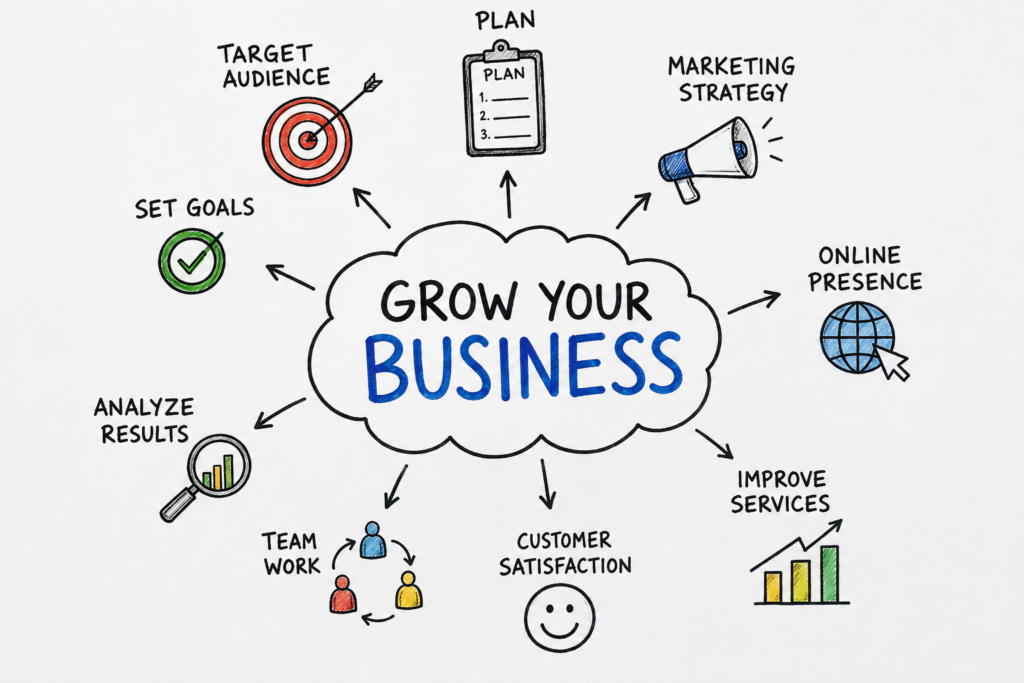
Understand your target customers, set clear goals, improve your products and services, build an online presence, use effective marketing, provide excellent customer service, and manage your finances carefully. At the same time, focus on customer loyalty, strong branding, reliable employees, and regular performance tracking.
Small business growth does not happen overnight. The businesses that succeed are usually those that continue learning, improving, and serving their customers well. By following these strategies and staying focused on your long term goals, you can build a stronger business and create opportunities for sustainable growth.