
Related Articles



Starting a small business can be an exciting way to earn money, build something of your own, and create a better future. Many people start a small business with a great idea and strong motivation, but having a good idea is not always enough. Business owners can make mistakes that affect their sales, profits, customers, and long term growth. Some mistakes are easy to fix when they are noticed early, while others can become expensive problems.
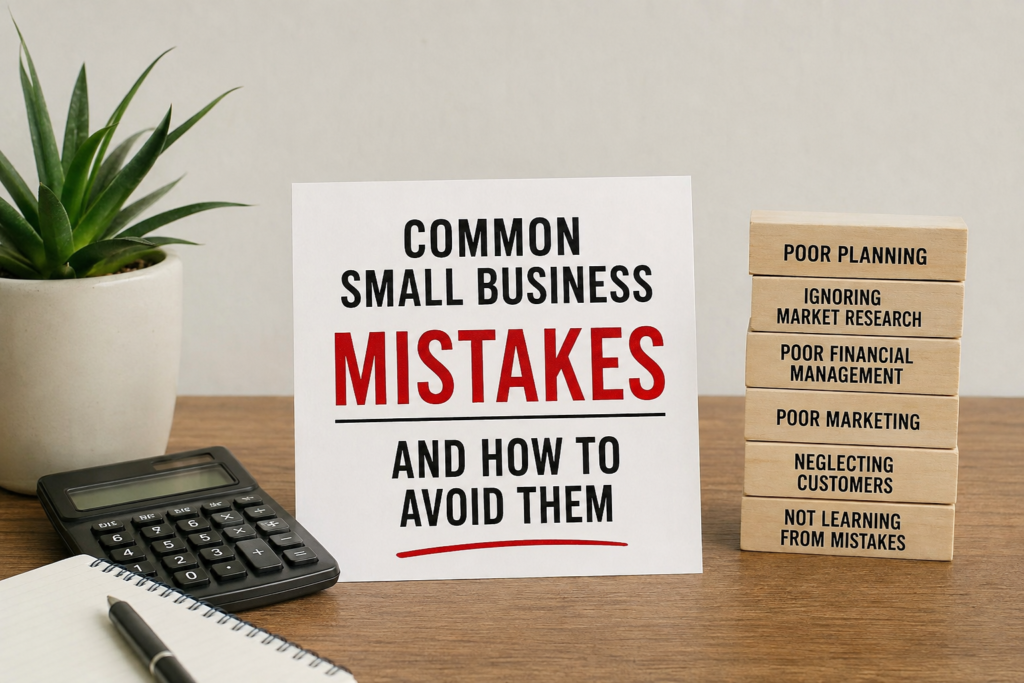
Understanding common small business mistakes can help new entrepreneurs make better decisions from the beginning. Whether you run an online store, home based business, service business, or local shop, avoiding basic mistakes can improve your chances of success. In this article, we will discuss the most common small business mistakes and practical ways to avoid them.
1. Starting Without a Clear Business Plan
One of the most common small business mistakes is starting without a proper plan. Some people begin selling products or services because they believe customers will buy them. However, without understanding the market, target customers, pricing, expenses, and business goals, it can be difficult to build a successful business.
A business plan does not need to be complicated. Write down what you want to sell, who your customers are, how you will reach them, what your expected expenses are, and how you plan to make money. A simple plan can give you direction and help you make better business decisions.
2. Ignoring Market Research
Another common mistake is not researching the market before launching a product or service. Business owners sometimes assume that people will automatically want what they are offering.
Market research helps you understand your customers and competitors. Find out what customers need, what they are already buying, what prices they are comfortable with, and what competitors are offering. You can use online searches, customer surveys, social media, and competitor websites to collect useful information.
Good market research can help you find opportunities and avoid investing money in products that have little demand.
3. Poor Financial Management
Money management is one of the most important parts of running a small business. Many businesses struggle because the owner does not properly track income and expenses.
You should record every business expense and every sale. Keep business money separate from personal money whenever possible. Create a monthly budget and regularly check your cash flow.
It is also important to understand your profit instead of only looking at sales. A business can have high sales but still lose money if expenses are too high. Proper financial management helps you understand where your money is going and where you can reduce unnecessary costs.
4. Setting the Wrong Prices
Pricing products or services too low is another common small business mistake. New business owners sometimes lower their prices because they want to attract customers quickly. However, very low prices can make it difficult to cover expenses and earn a reasonable profit.
Before setting your prices, calculate the cost of materials, labor, packaging, delivery, marketing, and other business expenses. Then consider the value you provide to customers and compare your prices with competitors.
Your goal should not always be to offer the cheapest price. Instead, focus on offering good value and explaining why your product or service is worth the price.
5. Trying to Serve Everyone
A small business cannot always serve every type of customer. Trying to target everyone can make your marketing confusing and less effective.
Identify your ideal customer. Think about their needs, interests, problems, budget, and buying habits. Once you understand your target audience, you can create better products and marketing messages.
For example, instead of advertising a product to everyone, you can focus on a specific group that is more likely to need it. A clear target market can make your marketing more focused and affordable.
6. Neglecting Online Marketing
Today, many customers search online before making a purchase. A small business that ignores online marketing may miss valuable opportunities.
Create a professional website or online presence where customers can learn about your products and services. Use social media platforms that your target customers actually use. Share useful content, product information, customer reviews, and helpful tips.
Search engine optimization can also help your website appear in search results. Use relevant keywords naturally in your website content, page titles, headings, and articles. Consistent online marketing can help increase visibility and bring new customers to your business.
7. Providing Poor Customer Service
Customers are one of the most valuable parts of any business. Poor customer service can quickly damage your reputation and cause customers to choose competitors.
Always communicate politely and respond to customer questions as quickly as possible. Be honest about prices, delivery times, product quality, and policies. If a customer has a problem, try to find a reasonable solution.
Happy customers are more likely to return and recommend your business to others. Good customer service can become a major advantage over competitors.
8. Failing to Track Business Performance
Some small business owners work hard every day but do not measure their results. Without tracking performance, it is difficult to know what is working.
Keep an eye on important numbers such as sales, profit, expenses, customer growth, website visitors, and marketing results. Review these numbers regularly.
If one marketing method brings many customers while another produces almost no results, you can adjust your strategy. Tracking performance helps you make decisions based on real information instead of assumptions.
9. Spending Too Much Too Early
It is easy to become excited when starting a new business and spend money on unnecessary equipment, advertising, software, or office space.
Try to keep your starting costs under control. Buy what you actually need to serve customers and operate efficiently. As your business grows, you can invest more money in tools, employees, equipment, and marketing.
Starting small can reduce financial pressure and give you more time to understand what your customers really want.
10. Doing Everything Alone
Many small business owners try to handle every task themselves. They may manage sales, customer service, accounting, marketing, website updates, and product delivery without asking for help.
Doing everything alone can lead to stress, mistakes, and slow growth. Learn to delegate tasks when possible. You can hire freelancers, use useful business tools, or work with professionals for areas such as accounting and legal requirements.
Your time should be spent on activities that have the greatest impact on business growth.
11. Ignoring Customer Feedback
Customer feedback is a valuable source of information. Some business owners take criticism personally and ignore complaints. This can prevent them from discovering problems.
Listen carefully to what customers say about your products and services. Look for repeated complaints or suggestions. If several customers mention the same issue, consider making a change.
Customer feedback can help you improve your products, website, customer service, and overall business experience.
12. Not Keeping Up With the Competition
You should know what other businesses in your industry are doing. This does not mean copying them. It means understanding the market and finding ways to provide something better or different.
Check competitor prices, services, promotions, content, customer reviews, and marketing strategies. Then identify your own strengths.
Your competitive advantage could be better service, higher quality, faster delivery, better communication, unique products, or a more convenient customer experience.
13. Giving Up Too Quickly
Business growth usually takes time. One of the biggest mistakes is expecting immediate success and giving up after a few months.
Not every product will become successful immediately. Some marketing strategies may need adjustment. Some mistakes are part of learning.
Set realistic goals and review your progress regularly. Learn from failures instead of treating them as the end of your business. Patience, consistency, and continuous improvement can make a major difference.
How to Avoid Small Business Mistakes
The best way to avoid common small business mistakes is to stay organized, learn continuously, and make decisions carefully. Start with a clear business plan and understand your target customers. Keep accurate financial records and control unnecessary expenses.
Pay attention to customer feedback and regularly measure business performance. Use online marketing to increase your visibility and focus on providing excellent customer service.
It is also helpful to continue learning about your industry. Read useful business content, study successful companies, talk to experienced entrepreneurs, and learn from your own results. You do not need to know everything before starting a business, but you should be willing to learn as you grow.
Conclusion
Running a small business can be challenging, but many common problems can be avoided with proper planning and careful decision making. Poor financial management, weak marketing, unclear pricing, lack of market research, poor customer service, and trying to do everything alone are some of the mistakes that can hold a business back.
The good news is that mistakes can often become learning opportunities. By creating a clear plan, understanding your customers, managing money carefully, tracking performance, and improving your services, you can build a stronger business foundation.
Success in small business does not happen overnight. It comes from consistent effort, smart decisions, customer understanding, and the willingness to improve. Avoiding common small business mistakes can save money, reduce stress, and give your business a better chance to grow successfully over time.