
Related Articles


Having a business idea can be exciting. You may think about a product you want to sell, a service you want to offer, or a problem you want to solve. However, having a good business idea is only the beginning. Turning that idea into a real business requires planning, research, patience, and consistent action.
Many people have great business ideas but never take the first step. They may worry about money, competition, failure, or not knowing where to start. The good news is that you do not need to have everything perfect before starting. You need a clear direction and a practical plan.
In this article, you will learn how to turn a business idea into reality and build a strong foundation for your future business.
Start With a Clear Business Idea
The first step is to clearly understand your business idea. Ask yourself what you want to sell and why people would want to buy it. A simple idea is often easier to develop than an idea that tries to solve too many problems at once.
Write your business idea down in simple words. Explain what your business will offer, who your customers will be, and what problem your product or service will solve.
For example, instead of saying that you want to start an online business, make the idea more specific. You might want to sell affordable handmade home decorations to people who want unique products for their homes.
A clear business idea gives you a starting point and helps you make better decisions later.
Identify Your Target Customers
A business cannot succeed without customers. Before investing money, you should understand who your potential customers are.
Think about their age, interests, needs, buying habits, location, and budget. Most importantly, understand the problem they are trying to solve.
Talk to potential customers if possible. Ask them what they currently use, what they like about existing products, and what they would like to see improved. Their answers can help you make your business idea more useful.
Understanding your target audience is one of the most important steps when turning a business idea into reality.
Research the Market
Market research helps you understand whether people are actually interested in your idea. It also helps you discover competitors and identify opportunities.
Search for businesses that offer similar products or services. Study their prices, customer reviews, marketing methods, websites, and social media presence. Pay attention to what customers like and what they complain about.
You do not need to copy your competitors. Instead, use your research to find ways to make your business different.
Your advantage could be better customer service, affordable pricing, higher quality, faster delivery, better design, or a more convenient buying experience.
Test Your Business Idea
One common mistake new entrepreneurs make is spending too much money before testing their idea. You do not need to build a large business immediately.
Start small and test your product or service with a limited number of customers. This can help you discover whether people are willing to pay for what you are offering.
For example, if you want to start an online clothing business, you could begin with a small collection instead of buying a large amount of stock.
Customer feedback can show you what needs improvement. If people like the idea but do not want to pay your current price, you may need to change your pricing or improve the value of your offer.
Testing reduces risk and gives you useful information before you make bigger investments.
Create a Simple Business Plan
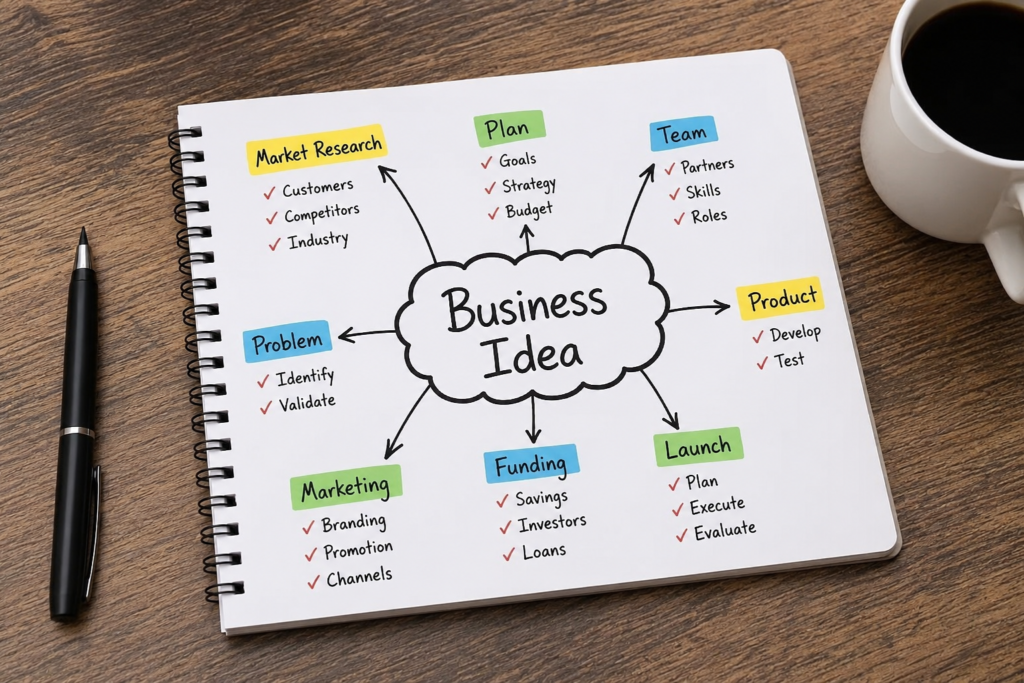
A business plan gives your idea structure. You do not need a complicated document when you are starting. A simple business plan can be enough.
Write down your business goals, target customers, products or services, expected costs, pricing strategy, marketing plan, and estimated income.
Also think about how you will operate the business each day. Consider suppliers, equipment, employees, delivery, customer support, and other important activities.
Your business plan should not be treated as something permanent. You can update it as your business grows and you learn more about your customers.
Calculate Your Startup Costs
Money is an important part of turning a business idea into reality. Before starting, calculate how much money you will need.
List every expected expense, including equipment, inventory, packaging, website costs, advertising, transportation, software, rent, and other operating expenses.
Separate necessary expenses from expenses that can wait. Many new entrepreneurs spend money on things that are not essential during the early stages.
Starting with a small budget can give you more time to understand your market and generate revenue before making larger investments.
Decide How You Will Make Money
A strong business idea needs a clear way to generate revenue. Think carefully about how customers will pay you.
You could sell individual products, charge for services, offer subscriptions, create packages, or use another business model.
Your pricing should cover your costs while giving you a reasonable profit. At the same time, your price should make sense for your target customers.
Do not choose a price only because competitors are charging a certain amount. Consider the value you provide and the total cost of delivering your product or service.
Build a Basic Version of Your Product or Service
You do not always need a perfect product before launching. Creating a basic version can help you start faster.
Focus on the most important features that solve the customer’s main problem. Once people start using your product or service, you can improve it based on their feedback.
This approach allows you to learn from real customers instead of spending months guessing what they want.
Starting with a simple version also helps you control your initial business expenses.
Create Your Business Brand
Your business needs an identity that customers can recognize. Choose a simple and memorable business name. Create a professional logo and select a consistent style for your website, packaging, and social media.
Your brand is more than a logo. It is the overall experience customers have with your business.
Good communication, reliable service, quality products, and honest marketing can help create a strong business brand.
You should also create a professional online presence. Depending on your business, this could include a website, social media accounts, an online store, or a business profile on relevant platforms.
Start Marketing Your Business
Even the best product needs marketing. Customers need to know that your business exists.
Start by choosing marketing channels where your target customers spend time. Social media can be useful for many small businesses because it allows you to share products, educational content, customer stories, and special offers.
You can also use search engine optimization to help people discover your website through search engines. Creating useful content around your business topic can bring visitors who are already interested in what you offer.
Word of mouth is another powerful marketing method. Satisfied customers can recommend your business to friends, family, and colleagues.
Focus on providing value instead of simply trying to sell something in every message.
Launch Your Business
Once your product, pricing, basic branding, and marketing plan are ready, it is time to launch.
Your first launch does not have to be huge. Start with a small group of customers and focus on providing an excellent experience.
Tell people about your business through social media, personal contacts, local communities, email, or other suitable marketing channels.
Expect some challenges during the early days. You may discover problems with delivery, pricing, customer communication, or your product. Treat these problems as learning opportunities.
The goal of your first launch is not perfection. The goal is to start learning from real business activity.
Listen to Customer Feedback
Customer feedback is extremely valuable for a new business. Ask customers what they liked and what could be improved.
Pay attention to repeated complaints or suggestions. If several customers mention the same problem, it may be something you should fix.
Positive feedback can also show you what makes your business valuable. You can use this information to improve your marketing and strengthen your product.
Businesses that listen to customers have a better chance of building long term relationships.
Track Your Business Performance
Once your business starts operating, track important numbers. Keep records of sales, expenses, profits, customer growth, marketing results, and cash flow.
These numbers can tell you whether your business is moving in the right direction.
For example, high sales do not always mean high profits. If your costs are too high, you may need to improve your pricing or reduce unnecessary expenses.
Regularly reviewing your business performance helps you make decisions based on facts instead of guesses.
Keep Improving and Growing
Turning a business idea into reality is not a one time task. Once you launch, your next responsibility is to improve.
Continue learning about your customers and your industry. Look for ways to improve your products, customer service, marketing, and business operations.
As your business becomes more stable, you can consider adding new products, reaching new customers, hiring employees, or entering new markets.
Do not rush growth. Build a strong foundation first and grow at a pace your business can support.
Conclusion
Turning a business idea into reality requires more than creativity. It requires action, research, planning, testing, and patience. Start by clearly defining your idea and understanding your target customers. Research the market, test your product, create a simple business plan, calculate your costs, and develop a clear way to make money.
You do not need to wait until everything is perfect. Start small, learn from customers, and improve your business step by step.
A business idea becomes a real business when you take consistent action. With the right approach, careful planning, and a willingness to learn, you can turn your business idea into a successful and sustainable business.